Amita Trehan
24-Sep-2026
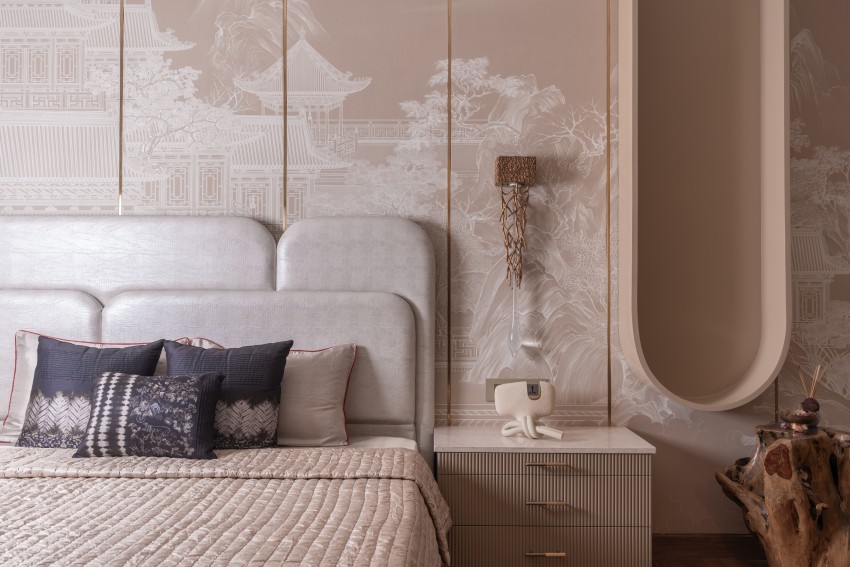
Colour, light, texture and visual quiet can together create the peaceful transition you need.
By Amita Trehan, Founder & Principal Interior Designer, Bravura Design Solutions
We often think about the bedroom in terms of how it looks: the colour of the walls, the bed, the fabrics, the artwork. But when I design a bedroom, I think about something that comes before all of that: how the space should make you feel when you enter it at the end of the day.
We spend most of our waking hours surrounded by stimulation - screens, conversations, traffic, artificial light, work, deadlines, and constant notifications. The bedroom should not feel like an extension of that environment. It should almost subconsciously tell us that the pace has changed.
I think of this as a “transition tone.” It is not necessarily one particular colour, but the overall visual temperature of a bedroom - the colour palette, lighting, textures, and even the amount of visual information, which helps us move from an active state into a calmer one.
CALM DOES NOT HAVE TO MEAN BEIGE
There is a tendency to equate a calm bedroom with beige, white or grey. I don't believe calm has to be colourless.
Depending on the personality of the person using the room, a transition palette could be sage, muted olive, dusty blue, warm taupe, clay, mushroom, muted terracotta or even a deeper, cocooning burgundy.
What matters is that the colour feels harmonious rather than visually jarring and responds beautifully to the warmer, lower light we tend to use in the evening. There is also a difference between a colour that looks beautiful on a mood board and one that feels good when you are surrounded by it every night.
START WITH THE PERSON, NOT THE PALETTE
Before deciding on the colour palette, I would ask a client a very simple question: What happens in this room between 8 pm and midnight?
Does the person come home late from work? Do they watch television in bed, read, work on a laptop or spend time with their children? Is the bedroom also doubling up as a dressing room or home office?
That routine should influence the design. Someone coming home after a highly stimulating workday may need considerably more visual quiet, while someone else may find comfort in a bedroom that is expressive, layered and full of colour.
This is where mood-mapping becomes more useful than simply following a colour trend.
THINK ABOUT WHAT YOU WANT THE BEDROOM TO DO
One of the first questions I ask my clients is whether they want a television in their bedroom. Personally, I have never had one in mine.
For me, the bedroom is a calming space. When I enter it, I don't want another screen, another stream of content or another reason to remain engaged with the outside world. I want quiet and an opportunity to disconnect.
That does not mean every bedroom needs to be screen-free. But it is worth asking whether every element we bring into the room is helping us create the experience we actually want from it.
LIGHTING CAN CHANGE THE MOOD COMPLETELY
Lighting is perhaps even more important than wall colour when creating this transition.
The shift from day to night should happen in stages. Bright, functional lighting may be useful while dressing or organising things, but as bedtime approaches, the bedroom should be able to move towards lower-level, warmer and more indirect illumination.
Bedside lamps, wall sconces, concealed lighting and reading lights can all help create this change. A single ceiling light trying to perform every function rarely creates the atmosphere a bedroom needs.
USE TEXTURE TO CREATE QUIET
Calm is not created through colour alone. Materiality plays an equally important role.
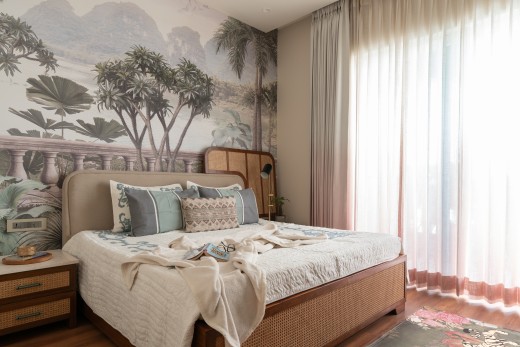
The eye registers texture even before we consciously think about it. An upholstered headboard, natural timber, linen or cotton, soft curtains and a rug underfoot can make a bedroom feel warmer, quieter and more tactile.
I would much rather create a sense of calm through thoughtful materiality and layering than simply make everything white.
REMOVE THE SIGNALS OF UNFINISHED WORK
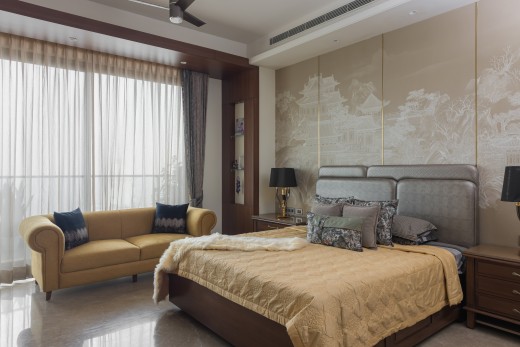
If the first thing you see from bed is a laptop, charging cables, paperwork, an ironing board or an overflowing chair, the room continues to communicate unfinished tasks.
Good bedroom design should give these everyday objects somewhere to disappear. This is particularly important today, when the boundaries between work and home are increasingly blurred.
Decluttering for sleep is not about creating an Instagram-perfect room. It is about reducing the visual reminders of work and everything that belongs to the daytime, so that the bedroom can genuinely feel like a different part of the day.
MAKE ROOM FOR YOUR PERSONALITY
At the same time, I would never advocate making a bedroom so minimal that it becomes an impersonal hotel room.
Photographs, books, artwork, inherited objects, and things that carry personal memories can create a sense of emotional comfort. The bedroom is not a space that needs to make an impression on a guest. It needs to feel good to the person who lives in it.
I also believe comfortable seating is important wherever the space allows. Personally, once I am up in the morning, I don't tend to go back and sit on the bed. Having another comfortable place to sit allows the bedroom to become a more functional, lived-in family space rather than simply a room centred around the bed.
Ultimately, a calming bedroom is not created by one colour, one trend, or one design rule. Colour is not the defining factor in creating calm; it is how colour, pattern, lighting, texture, furniture, storage, and personal objects are brought together. The way a bedroom is organised should also make everyday living feel more intuitive and effortless. When everything has a place, and the room works naturally around your routine, the space begins to feel calmer without having to be overly minimal.
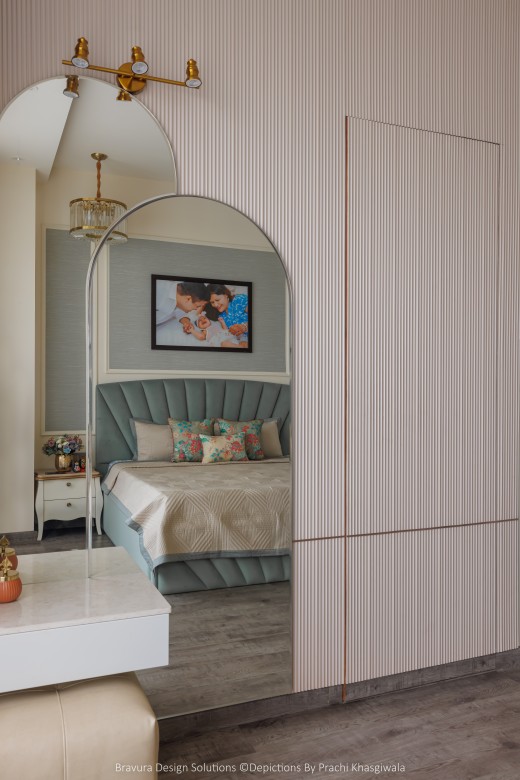
THE OBJECTIVE IS VISUAL CALM, NOT VISUAL EMPTINESS
A bedroom should not demand that you become calm the moment you enter it. Good design should help you arrive there gradually. Colour, light, texture and visual quiet can together create that transition from the pace of the day to the rhythm of the night.