Maj Gen (Dr) Rajesh Chopra
06-May-2026

India's single malt whisky tradition may be younger than Scotland's by centuries, but its climate, grain, and craft are producing something the old world never could. We break it down.
Inputs By: Maj Gen (Dr) Rajesh Chopra, AVSM (Retd), Director General, Indian Malt Whiskey Association ( IMWA )
For centuries, the cool, misty glens of Scotland dominated the narrative of single malt. Today, however, a new chapter is being written under the blazing tropical sun. Indian single malts have transformed from a daring experiment into a worldwide sensation, proudly standing alongside established heritage labels.
The domestic market provides significant evidence of this shift: in 2023, out of the 675,000 cases of single malt sold in India, an unprecedented 345,000 were homegrown, officially surpassing legendary international counterparts. But what precisely distinguishes Indian single malt, and in what ways does its production diverge from traditional whisky-making practices?
The Grain of Truth
At the heart of any single malt lies malted barley, and this is where Indian malt whisky encounters the first significant departure from Scottish tradition.
Traditional Scotch (Two-Row Barley): Distillers in Scotland predominantly use two-row barley. It is prized for its high starch content and lower protein, which makes for a highly efficient sugar yield and a generally lighter, smoother base spirit.
Indian Single Malt (Six-Row Barley): Distillers in India predominantly use six-row barley; however, two-row barley or a mix thereof can also be used. Although grains of six-row barley are smaller and produce less alcohol per batch, they are rich in proteins and enzymes.
This choice of grain fundamentally alters the spirit's DNA. Six-row barley produces a significantly oilier, spicier, and more robust character. When you taste an Indian single malt, you aren't just tasting the barrel; you are experiencing the zesty, velvety intensity of the grain itself.
The Tropical Element and the "Greedy Angels"
Time moves differently in India. In whisky-making, the climate is just as crucial as the ingredients, dictating how the spirit interacts with the oak cask. In Scotland's cool and damp environment, whisky slumbers undisturbed. The "Angel’s Share"—the amount of alcohol lost to evaporation each year—hovers around a modest 2 to 3%.
In India’s hot and humid regions, the heat causes the wood of the casks to expand and contract aggressively, pulling the whisky deep into the oak. Because of these conditions, the Angel's Share in India can reach a staggering 8 to 12% annually. Distillers lose a massive volume of their liquid to evaporation, but the trade-off is profound: an Indian single malt can achieve greater complexity, depth, and rich amber hue as compared to Scotch due to faster extraction and oxidation.
Crafting the Liquid Gold
Despite these regional differences, the basic mechanics of single malt production remain firmly rooted in tradition. An Indian single malt must be made from 100% malted barley in a single distillery using copper pot stills and matured for a minimum of three (03) years in oak casks of capacity less than 700 liters. Indian producers must use oak casks to tame and compliment their intense base spirit. They may use ex-bourbon barrels for rich vanilla and caramel notes or finished in Oloroso sherry, Pedro Ximénez, or wine casks or in a combination of multiple barrels to add layers of dark fruit and warmth.
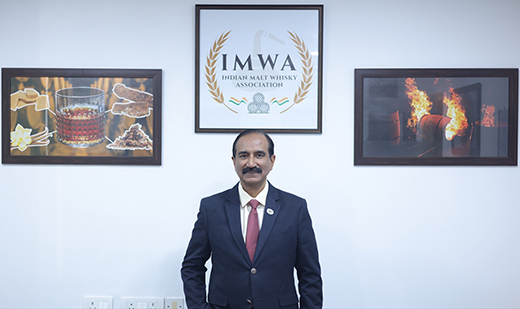
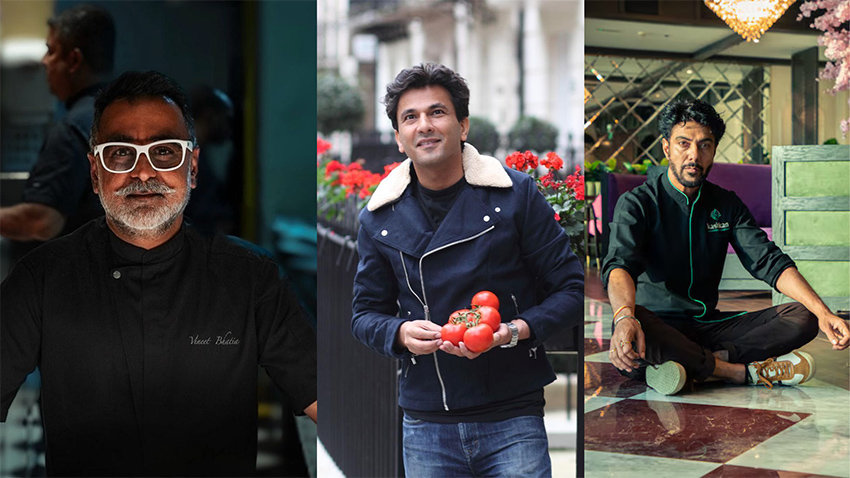
(In image: Maj Gen (Dr) Rajesh Chopra, AVSM (Retd), Director General, Indian Malt Whiskey Association)
A Distinct Flavour Experience
If Scotch is often characterised by subtle orchard fruits, heather, and delicate smoke, Indian single malt is a vibrant explosion of the tropics. The interplay between six-row barley and tropical maturation results in a distinctive flavour profile. When nosing an Indian single malt, one often encounters a refreshing bouquet of mango, pineapple, and citrus. On the palate, this fruity introduction transitions to flavours of intense dark chocolate, honeyed nuts, and exotic spices such as cardamom, ginger, and black pepper.
The Modern Drinker and India’s Whisky Renaissance
The meteoric rise of these whiskies is not just a triumph of production but a reflection of a changing consumer base. Whisky is no longer confined to leather-bound armchairs.
The broader Indian alcohol market is projected to reach a massive $312.4 billion by 2036, reflecting that a definitive shift toward premiumisation is underway. A younger demographic is driving the trend: drinkers aged 25–35 now account for roughly 45 per cent of single malt consumption. Furthermore, the market is becoming significantly more inclusive, with women driving 64 per cent of the novel growth in this category.
For these modern consumers, choosing a homegrown brand isn't just a matter of taste; it is an exploration of identity and a celebration of Indian craftsmanship on the world stage.
Two Traditions, One Evolving Standard of Excellence
Understanding Indian single malt begins with recognising that exceptional whisky is defined not only by geography but also by adherence to craft and quality. While Scotland reflects the legacy of time-honoured maturation and balance, India brings a distinct expression shaped by climate, terroir, and tropical ageing. Both traditions operate within the discipline of malt whisky making yet deliver uniquely compelling outcomes. Together, they reinforce that the global whisky landscape is not hierarchical but evolving, driven by authenticity, innovation, and a shared commitment to excellence.
Cover Credits: iStock