Shilpi Madan
30-Jan-2026
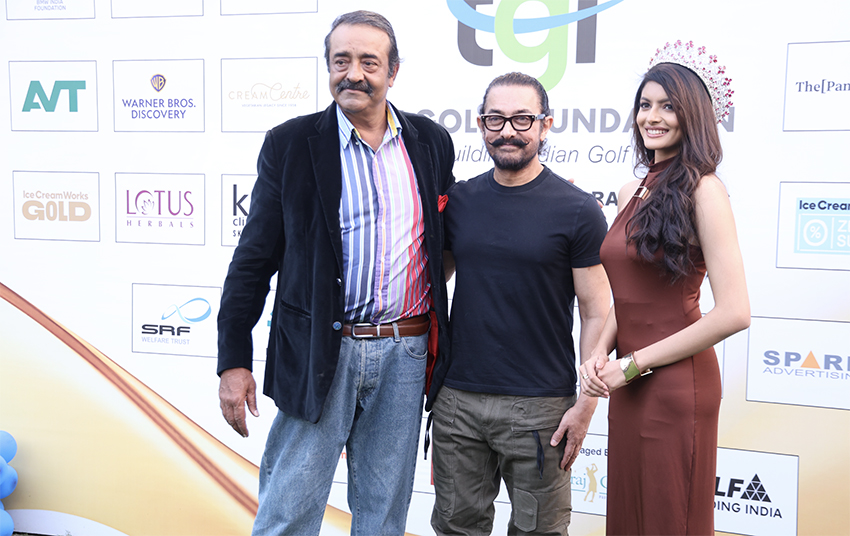
For Amit Luthra of The Golf Foundation, mentoring aspiring golfers from underprivileged backgrounds for 26 years has been an extremely rewarding pursuit.
Former National Champion and Arjuna awardee Amit Luthra is a man of few words.
Teeing off successful careers for aspiring young golfers across the country through The Golf Foundation, Amit powers the dreams of the underprivileged who desire to crack into the ace league in the sport. Born in 2000, The Golf Foundation - a sport-led social impact institution - has been developing world-class athletes and responsible citizens.
The Foundation recently brought in its 18th Annual Fundraising Golf Tournament at Chembur in Mumbai with acclaimed actor Aamir Khan as Chief Guest. Twenty six years since inception, The Golf Foundation continues to redefine golf in India by nurturing talent from economically disadvantaged sections to develop world trailblazers in confident, future-ready athletes.
Excerpts from a conversation:
You have succeeded in teeing off young careers in a country where cricket is a religion. What has been your biggest challenge?
Cricket in India is more than a sport—it’s a way of life. The top three sports in the country are cricket, cricket, and cricket. Everything else follows at a distant 4th. This reality means that other sports, including golf, struggle for attention, resources, and infrastructure.
To counter this, we adopted an unconventional approach. Through our third edition of Pan-India Talent Hunt, we reached out to associations for cricket, hockey, football, and tennis associations across the country and invited young athletes to explore golf.
We believe if a child demonstrates coordination, athleticism, and a hunger to succeed - even if they’ve never held a golf club — we believe they can be trained. Our mission is simple: no talent should go unnoticed merely because it doesn’t come from a traditional golfing background. Who knows where the next Kohinoor diamond is lying?
You set up The Golf Foundation in 2000, yet this year marks the 18th edition of the TGF event. What took time in building the system, and how has the journey been so far?
For the first decade, The Golf Foundation was entirely self-funded. I personally invested several crores and persuaded a few close friends to support the cause. At that time, there was very little belief that golf - especially for underprivileged children – was worth investing in.Fundraising wasn’t even an option.
The journey since then has been truly remarkable. Our golfers have won seven World Junior and two European Junior titles, and today they compete and win on the Asian Tour, European Tour, and the Tour of the Americas.
When you compare where Indian golf stood 20–25 years ago to where it is today, the progress is undeniable and deeply rewarding.

How many lives has TGF touched so far?
The Golf Foundation has supported nearly 700–800 young golfers till now. Many of them are now competing professionally and earning close to -or even more than one crore rupees annually.
Golfers such as Ashok Kumar, Rashid Khan, Chikkarangappa, Honey Baisoya, Manu Gandas, and Shubham Jaglan exemplify what sustained support can achieve. Several of our alumni today drive S-Class and E-Class cars and own homes. These outcomes were unimaginable when they first joined the Foundation. These are not just sporting achievements; they are powerful life transformations.
With growing awareness around the sport, which regions of India are now producing the most promising talent?
North India continues to lead the talent pipeline, particularly from Delhi and Chandigarh. We are also witnessing encouraging progress from West Bengal, and Bangalore along with a steady emergence of talent from other parts of the country as access, awareness, and structured coaching improve nationwide.
Golf is an expensive sport. How does TGF provide mentorship, coaching, and financial support to underprivileged aspirants?
Financial support is only one part of the equation. We cover training, equipment, travel, and tournament expenses but mentorship is where the real impact lies. Many of these children face systemic challenges that money alone cannot fix. We guide them through education, travel, visas, discipline, and life skills. We step in where systems fail them and ensure that no opportunity is lost due to lack of support or advocacy. Our aim is to build well-rounded individuals, not just good golfers.
Would you like to see government initiatives supporting the growth of golf in India?
Absolutely. Golf has immense potential, not just as a sport, but as a career pathway. Government support in terms of access to facilities, grassroots programmes, and integration with school sports systems would go a long way in broadening participation and changing perceptions around the game.
What has been your biggest learning in life?
Time management and resilience. During my own journey, I balanced professional studies with competitive golf, pushing myself both mentally and physically. That discipline shaped everything I do today. Equally important is the lesson of never giving up. Life, much like sport, will knock you down repeatedly. What matters is whether you choose to get back up. That philosophy is at the core of how I mentor every child at The Golf Foundation.
What’s next ?
We are focused on building long-term infrastructure and expanding our grassroot programmes. Our goal is to strengthen the nursery of Indian golf to identify talent early, nurture it holistically, and create a more inclusive ecosystem. With the momentum Indian golf is currently experiencing, the future truly holds limitless possibilities.