Pranjal Shah
10-Feb-2026
As the ICC T20 World Cup takes full swing, cricket’s journey from restrained tradition to expressive, commercialised style reveals how the sport became one of fashion’s most unexpected muses.
A gentlemen’s game, Cricket encompasses ritual, class markers, spectacle, and increasingly, a visual language. It has long established an aesthetic code rooted in decorum, restraint, and British gentility. With the evolution of cricket, this code has been disrupted, reinterpreted, and spectacularly reimagined, mirroring larger cultural shifts around masculinity, nationalism, media, and commerce. The journey from immaculate whites to neon-hued kits tells a larger story of how cricket learned to dress for the world it was playing in. As the ICC T20 World Cup approaches, cricket finds itself at its most expressive yet: a global stage where immaculate whites have given way to neon-hued kits, storytelling jerseys, and brand-driven identities, reflecting how the game has learned to dress for the world it now entertains.
The Gentlemanly Origins
Cricket’s earliest relationship with fashion was inseparable from class and colonial etiquette. Originating in 16th-century England and later codified in elite public schools and country clubs, cricket was a game of leisure for the aristocracy. Flannel trousers, long-sleeved cotton shirts, cream cable-knit sweaters, club blazers, and ties were as much a part of the game as the bat and ball. This gentlemanly uniform reinforced cricket’s association with discipline and leisure.
Players were expected to arrive well-groomed, spectators dressed formally, and club pavilions became runways of restrained elegance. The cricket sweater—often adorned with a coloured V-neck stripe denoting school, county, or club—became one of the earliest examples of coded sportswear. Over time, these garments quietly migrated into civilian wardrobes, particularly in post-war Britain, where cricket knits and tailored blazers influenced early preppy and Ivy League style.

(Picture Credits: Freepik)
Influx of the Brightly Coloured Jersey
The most dramatic fashion rupture in cricket arrived with coloured clothing. The late 1970s saw the advent of Kerry Packer’s World Series Cricket, which introduced day-night matches, floodlights, white balls, and most crucially, coloured kits. What began as a broadcast-driven innovation soon became a visual revolution.
By the 1990s, limited-overs cricket and the World Cup had firmly embraced colour. Jerseys became canvases for national identity, for instance, Australia’s canary yellow, Pakistan’s bottle green, and India’s blue. The shift was more than aesthetic; it was ideological. Cricket was no longer just a sport to be played but one to be watched, televised, marketed, and sold.
Logos appeared. Sponsors replaced crests. Fabrics became lighter, more aerodynamic, and increasingly synthetic. The jersey transformed from a uniform to merchandise, designed not just for players but also for fans. This era laid the groundwork for sportswear’s dominance in everyday fashion, with jerseys worn with denim, trainers, and later, styled as streetwear.
The Modern Indian Jersey
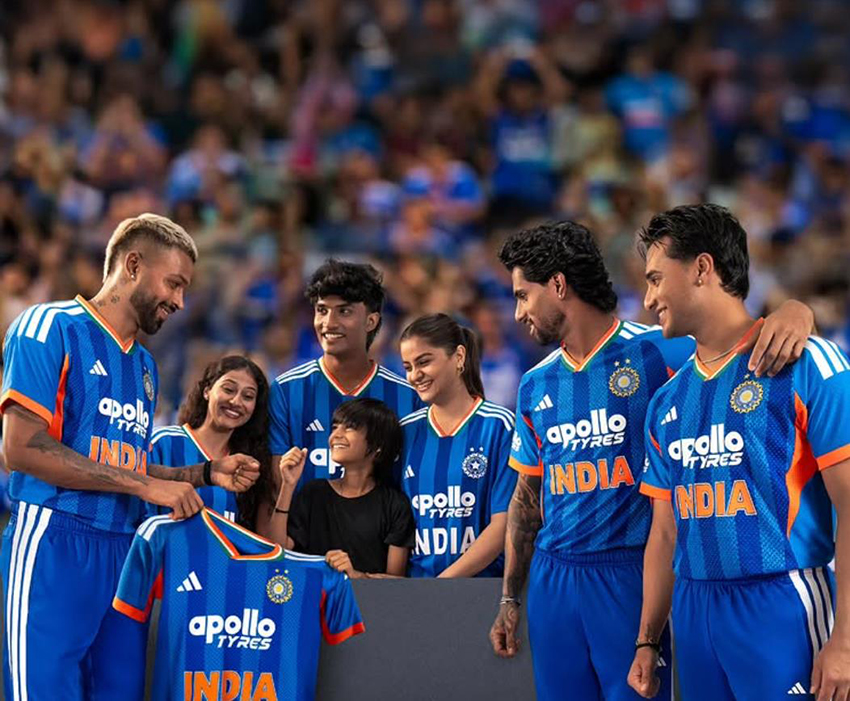
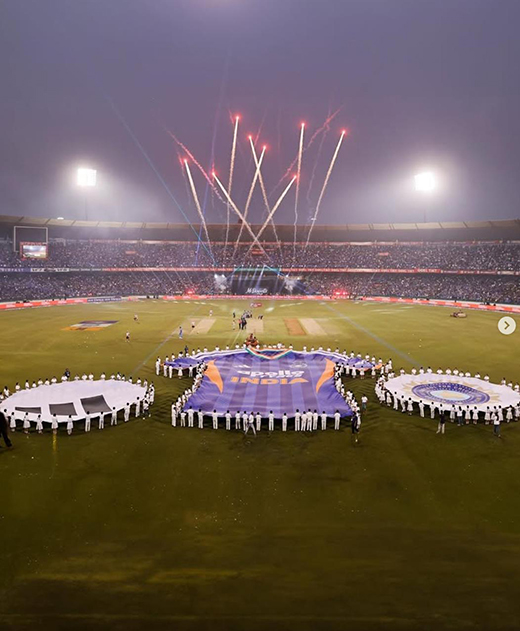
India’s cricket jersey offers perhaps the most compelling case study in contemporary sports fashion. For years, it remained functional—safe blues, predictable patterns, minimal storytelling. That changed with designer Aaquib Wani, whose redesign of the Indian team jersey marked a cultural shift in how cricket attire could embody national identity.
Wani approached the jersey with a narrative. Drawing inspiration from architectural geometry and the movement of the game itself, his design layered meaning into form. The blue is no longer flat; it holds depth and gradation. Patterns suggested motion, resilience, and continuity. The jersey has become aspirational, something one can wear beyond the stadium.
(Picture Credits: Adidas India, Instagram)
The Influence of IPL (Indian Premier League)
Launched in 2008, the IPL fused cricket with entertainment, celebrity culture, and unapologetic commercialism. Each team became a brand, complete with colour psychology, mascots, theme songs, and highly stylised kits. Jerseys turned bolder with purples, pinks and metallic golds and are often redesigned every season, echoing fashion’s cyclical nature. The IPL has normalised experimentation. Sleeveless training kits, graphic-heavy jerseys, athleisure travel looks, and off-field styling have become part of the spectacle.
More importantly, the IPL has blurred the line between sportswear and lifestyle fashion. Team merchandise has evolved into curated collections of polos, jackets, caps, and sneakers, alldesigned for everyday wear.
A Shifting Future
As cricket hurtles towards an increasingly fast, global, and digital future, its fashion evolution is far from complete. Sustainability, performance technology, and luxury collaborations are already shaping the next chapter. Jerseys may soon incorporate smart fabrics, modular designs, and storytelling that transcends national borders.
What remains constant is cricket’s unique ability to reflect its moment. From starched whites symbolising colonial restraint to expressive jerseys reflecting confidence and commerce, cricket fashion mirrors society’s shifting values. The sport that once dressed like a gentleman now dresses like the world it entertains—bold, diverse, and unapologetically visible.
Cover Credits: Adidas India, Instagram