Vidhi Gupta
25-Feb-2026
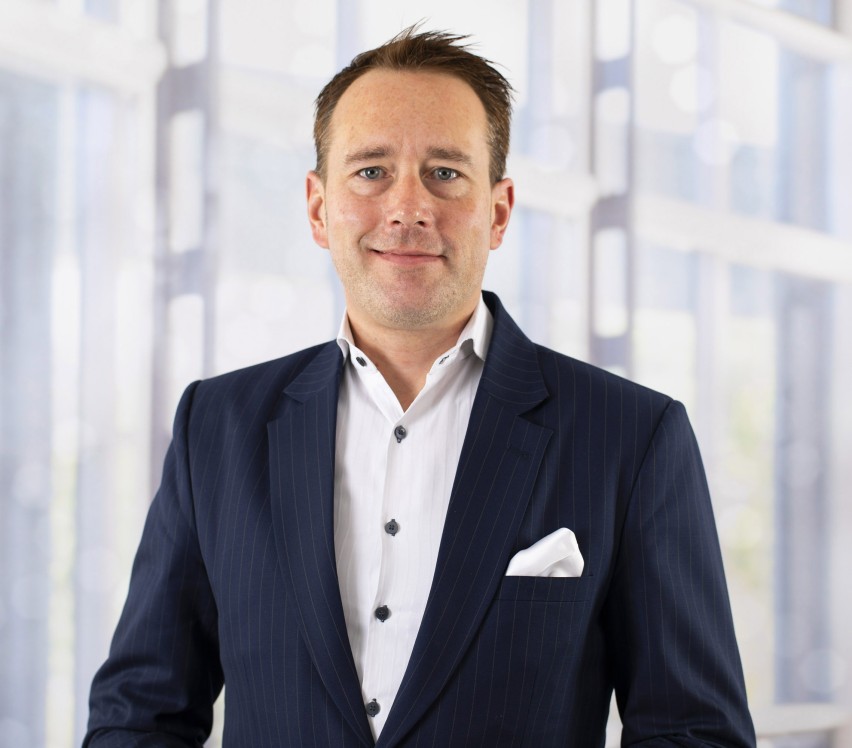
As Häfele opens its first flagship Design Centre in Gurugram, we get into a conversation with Frank Schloeder, Managing Director, Häfele South Asia.
With the launch of its flagship Design Centre in Gurugram, Häfele marks a defining moment in its India journey. Spanning over 10,000 sq. ft., the new space reflects the brand’s integrated philosophy, bringing together functionality, technology, and spatial intelligence under one roof.
At the centre of this evolution is Frank Schloeder, Managing Director of Häfele South Asia, who took over the regional mandate in 2022. With a global career shaped across Germany, France, and India, Schloeder brings a cross-cultural perspective to leadership. Under his stewardship, the brand has sharpened its focus on localisation, digitalisation and consumer-centric innovation, aligning global expertise with India’s unique spatial realities and lifestyle shifts.
In an email interaction with PEAKLIFE, Schloeder speaks about Häfele’s growth trajectory in the region, the evolving expectations of the modern Indian consumer, and how technology, sustainability and design thinking are shaping the future of interiors across South Asia.
1. How has your journey with Häfele been so far?
My journey with Häfele has been both meaningful and forward-looking. In India, we have grown into a strong and trusted brand over the years, built on engineering excellence and consistent market engagement.
What has been particularly encouraging is how the organisation continues to evolve — moving beyond individual products towards integrated, design-led solutions that reflect how people live and work today. We have focused on strengthening our ecosystem, deepening partnerships across the value chain, and aligning Häfele’s global expertise with strong local relevance.
A key part of this evolution has been our commitment to localisation and the Government of India’s Make in India initiative. By investing in local production capabilities, we are building a more resilient supply chain while ensuring consistent quality and regulatory compliance. At the same time, we are shaping a future-ready organisation — agile, adaptive, and structurally prepared for sustainable, long-term growth.
2. What do you think of the modern Indian consumers? How have they influenced Häfele’s product development and offerings?
The modern Indian consumer is informed, design-aware, and value-conscious. Functionality is now expected as a baseline; what differentiates a brand is how intuitively and seamlessly a solution integrates into everyday life.
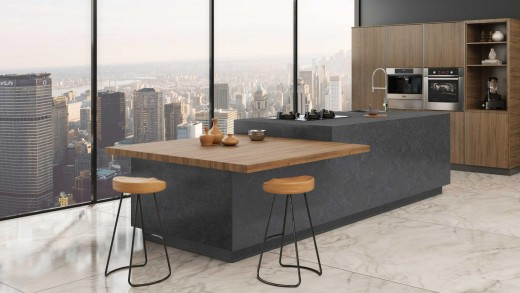
(Hafele’s Terra Surfaces Carbonite)
This shift has significantly influenced our approach. We continuously adapt our global portfolio to suit local needs while also developing India-specific solutions that respond to spatial realities, climatic conditions, and lifestyle preferences. A strong example is our Terra surfaces range, developed specifically for Indian conditions — combining durability, ease of maintenance, and design versatility. Our goal is to deliver solutions that balance international design standards with strong local relevance.
3. What role does technological innovation play in Häfele’s product development and customer experience strategy?
Technological innovation is integral to how we approach product development and customer experience at Häfele. It enables us to design solutions that are not only reliable and high-performing but also seamlessly integrated into interior environments.
Our focus is on creating systems that enhance usability while maintaining visual continuity and design integrity across spaces. Innovation at Häfele is driven by a deep understanding of how spaces are used today, combined with strong engineering expertise. This allows us to anticipate evolving needs and translate them into solutions that are adaptable, efficient, and future-ready. By continuously investing in technology and design development, we ensure that our offerings remain relevant and aligned with contemporary architectural and lifestyle trends.
4. Has customer behaviour in South Asia challenged any long-held assumptions you carried from your European experience?
Yes, in constructive ways.
While appreciation for quality and design is universal, South Asian consumers operate in far more diverse and dynamic conditions. Expectations around durability, versatility, and value are shaped by climate, density, and multi-functional living patterns — very different from more standardised European environments.
This has reinforced the importance of moving away from a one-size-fits-all mindset. It has strengthened our commitment to listening closely, responding faster, and co-creating solutions that reflect real usage patterns in the region. It is precisely this balance between global expertise and local adaptation that defines our approach today.
5. What trends or shifts do you foresee in the commercial interior landscape over the next five years?
Over the next five years, the commercial interior landscape is expected to become increasingly flexible, experience-led, and technology-enabled. Workplaces, hospitality, and retail environments are moving away from rigid formats towards spaces that can adapt to changing functions and user needs while still maintaining a strong design identity. There will also be a greater emphasis on sustainability, longevity, and efficient use of space, with materials and systems chosen for performance over time rather than short-term trends.
Integrated solutions that bring together functionality, lighting, and spatial intelligence will play a key role, as designers and developers seek interiors that are both visually cohesive and operationally efficient.
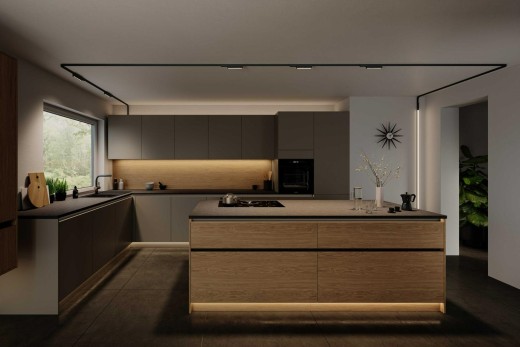
6. If homes could talk, which Häfele product do you think would get the most compliments?
If homes could speak, they would probably compliment the elements that quietly enhance everyday life – and integrated lighting would be high on that list.
Lighting influences mood, perception, and comfort in subtle yet powerful ways. When thoughtfully planned and seamlessly integrated, it brings architecture and materials to life.
At Häfele, we see lighting and functionality not as add-ons, but as essential components of design. The greatest compliment is when a space feels intuitive, cohesive, and effortless — and that philosophy guides much of what we do.
7. What’s your personal favourite “small luxury” product from the brand?
It is difficult to choose just one, because many of our solutions are designed to enhance everyday living. For me, “small luxury” is less about a single product and more about how seamlessly different elements come together.
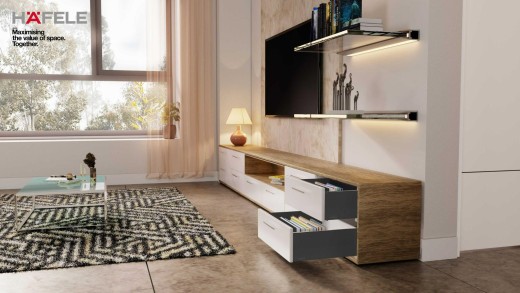
(Matrix Box Slim)
If I had to highlight one, it would be our Matrix Box drawer system. Its precision engineering, smooth movement, and near-silent performance reflect our commitment to quality and reliability. It is a product that performs effortlessly in the background yet significantly enhances the everyday experience of using a space.
That, to me, defines modern luxury — solutions that work intuitively, enhance daily interactions, and create a sense of refinement without being overt.
8. What’s next for you?
Our focus remains on strengthening Häfele’s presence in the region by deepening engagement with the design and architecture community while continuing to evolve our integrated, solutions-led approach.
A significant milestone in this journey has been the launch of our flagship Design Centre in Gurugram, spanning over 10,000 sq. ft. It represents a new way of showcasing spatial intelligence and complete living concepts under one roof. Alongside physical expansion, we continue to invest in localisation, technology and talent, ensuring that we remain agile, relevant and future-ready in a rapidly evolving market.
Cover Image Credit- Frank Schloeder, Managing Director, Häfele South Asia
By Hoshang Garivala,...